The challenge
Marriott International is one of the world's leading hotel groups, operating more than 6,500 hotels in 127 countries and regions. To improve operational efficiency and service quality, it uses RFID technology in several areas, including linen management.
At high occupancy, linen cycles speed up and many item types move quickly between departments. Manual counting and paper records are slow, give a delayed view of stock and leave handover responsibility unclear.
Typical problems in hotel linen operations:
- Time-consuming counts and frequent errors: high volumes and many SKUs make manual stocktaking slow and items easy to miss.
- Cumbersome housekeeping records: after cleaning, staff record and compile reports by hand, which is labour-intensive and not real-time.
- Poor transparency in collection and handover: physical counts and records often differ across collection, staging and outbound handover.
- Heavy warehouse stocktaking: long inventory checks make frequent cycle counts impractical and reduce inventory accuracy.
The solution
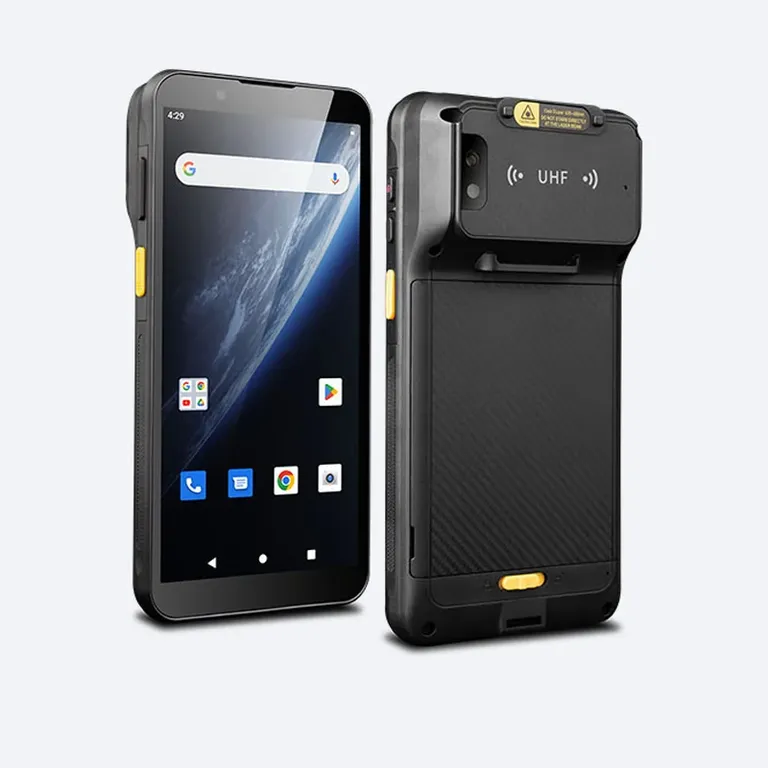
Marriott introduced an RFID linen management system (SLMS) and chose the Chainway MC51 handheld with built-in UHF RFID reader as the frontline device. Linens carry RFID tags and are scanned at key checkpoints in the hotel, creating a closed, traceable and measurable process.
Item-level identification
Washable RFID tags are sewn into bed sheets, towels and bathrobes. Each item has a unique ID and can be tracked by category, status and location.
Key process steps
- Clean linen receiving: staff bulk-scan incoming linen carts and baskets with the MC51, and the system records the receipt automatically.
- Housekeeping scanning: linens scanned during housekeeping are linked to specific floors or tasks, reducing manual recordkeeping.
- Dirty linen handover: collected and consolidated dirty linen is bulk-verified before handover; the system summarises quantities and categories and produces an accurate outbound record.
Why the MC51?
Hotel linen management needs dense tagging, fast bulk reading, a low missed-read rate and a durable device. The MC51 meets these needs:
- Built-in PCB antenna: a lightweight, ergonomic handheld for frequent use.
- Impinj E Series chipset with Gen2X support: stable reading in dense multi-tag scenarios.
- More than 750 tags per second: fast bulk counts on linen carts and in baskets.
- Read range of over 5 metres: fewer repeated close-range scans.
- Reliable reading: 240 tags in 1 second with no missed tags.
- 5000 mAh removable, hot-swappable battery: uninterrupted work through long shifts.
The result
Based on a 200-room hotel with an average occupancy of around 80%, the following results were measured after deployment:
- Linen counting time cut by about 90%: from 90 minutes to 10 minutes.
- Housekeeping report recording cut by about 90%: from 90 minutes to 10 minutes.
- Warehouse stocktaking time cut by about 80%: from 5 hours to 1 hour.
What this means in daily operations
- Faster counts: linen is dispatched on time even at peak periods.
- More accurate data: physical stock and system records match.
- Automated reporting: minimal paperwork and fewer missing entries.
- Clear accountability: every inbound and outbound movement is traceable.